
 |
| TDA Riders |
Monday, May 17, 2010


Sunday, May 16, 2010
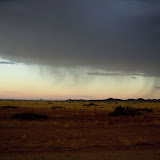
Sessriem to Felix Unite on the Namibia - South Africa border
Sessriem to Felix Unite on the Namibia - South Africa border – 700 kms with legs of 139, 153, 126, 108 and 174 kms.
Waiting to greet me in Felix Unite were ME, Bev and Jim. It was so good to see them. They had travelled up from Cape Town to greet the Tour. They will travel into Namibia for a few days and then join us as we reach Cape Town, where the Mayor and City Council will greet us before having a ceremonial dinner.
This was another memorable leg. Namibia’s scenery is stunning – it’s a ‘must return to’ kind of a place.
Bev will be relieved to know that the gravel roads became more manageable the further south we rode!
The first two days were very sandy with lots of climbing. The third day, the 126er, saw me riding quite well. Greeted by Cat at the lunch stop and with still 54 kms to go to camp, she announced, “Come on Bill. Let’s go out there and kick some ass. Draft closely behind me. We’ll do the 54 kms in under two hours.”
With 20 kms to go, Erin and Ruben passed us.
“Let’s tail them” said Cat.
We all rode as a peloton into camp. Cat kicked ass, and I just followed. I know the meaning of that phrase now! We made it in 1 hour and 59 minutes!
If you had told me a month ago that I would complete a 126 km ride along with multi-marathoner Cat and with 7 continent marathoner Erin, I’d have thought you daft. But on this day, I rode into camp with these guys.
“Hey Bill” asked Peter, “are you taking steroids?”
The last two days to the border I rode with Annalise and Dan.
It’s hard to believe that Jess Lianne and I joined this Tour one month ago, and we only have 6 riding days left to Cape Town.
I have come to know the riders quite well now. It’s been a most interesting exercise in group dynamics.
Sixty plus racers/riders in addition to 12 support staff left Cairo January 16. By the time we joined the group, they had worked out their interactions and their sub-groups. I had anticipated that it would be hard to break in, joining them late as we did in Malawi. I should not have been concerned. First, Jessica and Lianne, the integrators and connectors that they are, made immediate contact with everyone.
The incident with the lip injury occurred on our second day, and that further welded us into the group.
The names and bios of the riders, the racers and the staff are available on www.tourdafrique.com. Many write informative and interesting blogs.
I’m the oldest rider at 71. Rainer, a retired German engineer is a year younger than me. He walks with a limp, his left leg withered bespeaking a past encounter with poliomyelitis, but once he gets on his bike, he is awesome.
Rainer and I are more than twice the average age of the other riders, three under 20.
There are groups aligned by language, by racing versus riding and by age. Despite these categories, it is remarkable how well they all mix together. Two features distinguish the group; athleticism and achievement.
Each rider brings something unique and special to the group. I made a point of spending time with each of them and in doing so, I became inspired.
Steve is the youngest rider at 18, a recent graduate from Michael House School in Natal, enrolling in the Stellenbosch University soon. Michael, the young man with the earlier lip injury is 19, is enrolled in Medical School in the UK for September.
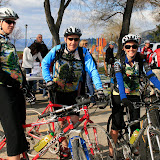
I’ve been adopted by a loose knit group, with ad hoc and self appointed leaders, Annalise, Cat, Wayne and Patrick. I don’t want to overdo the superlatives, but this gang is fabulous and fantastic!
Annalise is an investment banker from Sydney. I would guess her age to be that of Rebeccah. She is intelligent, creative and thoughtful – just like Rebeccah!
I’ve told you about Cat before – a corporate and litigation lawyer from New York. She too is remarkable. Among other things, she has worked for two years as a Peace Corps volunteer in Armenia.
I’ve particularly enjoyed getting to know Wayne and Patrick, Aussies, travel industry expert and paramedic respectively. Patrick is half way through his Master’s degree in International Development.
Frequent members in our group are Sam, an undergraduate from Stanford, Diane and Jeff from Aspen, owners of Colorado Audio – Visual, Adam, an American, Michael the soon to be Medical Student and Caroline, a police officer from Peel Ontario. Diane, at 60, is the oldest woman rider.
I’ve also made good friendships with Mark from Cape Town, an Industrial Psychologist, David from Toronto, a retail consultant, Peter from Johannesburg, a construction industry type and founder of the Pizer Cancer Foundation, Carolyn, the South African nurse and Michelle, the nurse fro Kamloops, Paddy from Ireland, an accountant who wants to do an MBA at Harvard. Everyone loves ‘Hardy on Tour’, from southern Germany. Marcel, possibly the best rider, from Holland is always a delight to speak with. Paul, an agronomist from the University of Minnesota, fractured his arm a year ago and had to leave. He returned this year to complete the Tour. He sends a daily message via satellite phone to his students back home describing agricultural and other points of interest. He interviewed me one day, discussing our work in Western Zambia and the status of HIV/AIDS in Africa. Dana is a wonderful young woman, an expert on low income housing having spent considerable time in New Orleans following the Katrina disaster. Eric the retired farmer from Lancashire, now living in retirement in eastern Spain writes a good blog and is lots of fun. Jim, the lawyer from Portland Oregon always cheered me along the way. Gerard and Sunil maintained the best blogs. Gisi from Germany was the fastest woman racer, almost beating Stuart from Australia as the fastest man. I also enjoyed Simon and Nicky from Johannesburg. "Hellooooooo Nickyyyyyyy." I particularly enjoyed Erin, on her way to Stanford to do an MBA, and Ruben, a German living in Zurich, a particularly bright young man - a corporate and financial advisor.
Henry, the owner of Tour d’Afrique has traveled with us since Windhoek and Brian from the TDA head office in Toronto traveled with us from Lilongwe to Victoria Falls, adding valuable perspectives and insights.
It’s amazing how many riders are raising money for some reason or another.
Anka rides for www.mozambikes.org, Paddy for ‘Self Help Africa’, Tony for education on Ethiopia, Dana for melanoma, Peter for Cancer, Wayne and Patrick for prostate cancer. Erin is the co-founder of ‘In the Running’ www.intherunning.org
an organization that connects endurance pursuits with global grassroots fundraising. Jos rides for the reduction of child abuse in South Africa, Michelle and Andre against child disappearance during the World Cup. Eric supports orphanages in South Africa. Gerard and Dan promote the distribution of bikes throughout Africa, as does the Tour d’Afrique Foundation. Tim supports a solar electric light fund. Rick supports Livestrong – and the list goes on………
And hey – I’m riding for better health in Zambia – www.okazhi.org
Waiting to greet me in Felix Unite were ME, Bev and Jim. It was so good to see them. They had travelled up from Cape Town to greet the Tour. They will travel into Namibia for a few days and then join us as we reach Cape Town, where the Mayor and City Council will greet us before having a ceremonial dinner.
This was another memorable leg. Namibia’s scenery is stunning – it’s a ‘must return to’ kind of a place.
Bev will be relieved to know that the gravel roads became more manageable the further south we rode!
The first two days were very sandy with lots of climbing. The third day, the 126er, saw me riding quite well. Greeted by Cat at the lunch stop and with still 54 kms to go to camp, she announced, “Come on Bill. Let’s go out there and kick some ass. Draft closely behind me. We’ll do the 54 kms in under two hours.”
With 20 kms to go, Erin and Ruben passed us.
“Let’s tail them” said Cat.
We all rode as a peloton into camp. Cat kicked ass, and I just followed. I know the meaning of that phrase now! We made it in 1 hour and 59 minutes!
If you had told me a month ago that I would complete a 126 km ride along with multi-marathoner Cat and with 7 continent marathoner Erin, I’d have thought you daft. But on this day, I rode into camp with these guys.
“Hey Bill” asked Peter, “are you taking steroids?”
The last two days to the border I rode with Annalise and Dan.
It’s hard to believe that Jess Lianne and I joined this Tour one month ago, and we only have 6 riding days left to Cape Town.
I have come to know the riders quite well now. It’s been a most interesting exercise in group dynamics.
Sixty plus racers/riders in addition to 12 support staff left Cairo January 16. By the time we joined the group, they had worked out their interactions and their sub-groups. I had anticipated that it would be hard to break in, joining them late as we did in Malawi. I should not have been concerned. First, Jessica and Lianne, the integrators and connectors that they are, made immediate contact with everyone.
The incident with the lip injury occurred on our second day, and that further welded us into the group.
The names and bios of the riders, the racers and the staff are available on www.tourdafrique.com. Many write informative and interesting blogs.
I’m the oldest rider at 71. Rainer, a retired German engineer is a year younger than me. He walks with a limp, his left leg withered bespeaking a past encounter with poliomyelitis, but once he gets on his bike, he is awesome.
Rainer and I are more than twice the average age of the other riders, three under 20.
There are groups aligned by language, by racing versus riding and by age. Despite these categories, it is remarkable how well they all mix together. Two features distinguish the group; athleticism and achievement.
Each rider brings something unique and special to the group. I made a point of spending time with each of them and in doing so, I became inspired.
Steve is the youngest rider at 18, a recent graduate from Michael House School in Natal, enrolling in the Stellenbosch University soon. Michael, the young man with the earlier lip injury is 19, is enrolled in Medical School in the UK for September.
I’ve been adopted by a loose knit group, with ad hoc and self appointed leaders, Annalise, Cat, Wayne and Patrick. I don’t want to overdo the superlatives, but this gang is fabulous and fantastic!
Annalise is an investment banker from Sydney. I would guess her age to be that of Rebeccah. She is intelligent, creative and thoughtful – just like Rebeccah!
I’ve told you about Cat before – a corporate and litigation lawyer from New York. She too is remarkable. Among other things, she has worked for two years as a Peace Corps volunteer in Armenia.
I’ve particularly enjoyed getting to know Wayne and Patrick, Aussies, travel industry expert and paramedic respectively. Patrick is half way through his Master’s degree in International Development.
Frequent members in our group are Sam, an undergraduate from Stanford, Diane and Jeff from Aspen, owners of Colorado Audio – Visual, Adam, an American, Michael the soon to be Medical Student and Caroline, a police officer from Peel Ontario. Diane, at 60, is the oldest woman rider.
I’ve also made good friendships with Mark from Cape Town, an Industrial Psychologist, David from Toronto, a retail consultant, Peter from Johannesburg, a construction industry type and founder of the Pizer Cancer Foundation, Carolyn, the South African nurse and Michelle, the nurse fro Kamloops, Paddy from Ireland, an accountant who wants to do an MBA at Harvard. Everyone loves ‘Hardy on Tour’, from southern Germany. Marcel, possibly the best rider, from Holland is always a delight to speak with. Paul, an agronomist from the University of Minnesota, fractured his arm a year ago and had to leave. He returned this year to complete the Tour. He sends a daily message via satellite phone to his students back home describing agricultural and other points of interest. He interviewed me one day, discussing our work in Western Zambia and the status of HIV/AIDS in Africa. Dana is a wonderful young woman, an expert on low income housing having spent considerable time in New Orleans following the Katrina disaster. Eric the retired farmer from Lancashire, now living in retirement in eastern Spain writes a good blog and is lots of fun. Jim, the lawyer from Portland Oregon always cheered me along the way. Gerard and Sunil maintained the best blogs. Gisi from Germany was the fastest woman racer, almost beating Stuart from Australia as the fastest man. I also enjoyed Simon and Nicky from Johannesburg. "Hellooooooo Nickyyyyyyy." I particularly enjoyed Erin, on her way to Stanford to do an MBA, and Ruben, a German living in Zurich, a particularly bright young man - a corporate and financial advisor.
Henry, the owner of Tour d’Afrique has traveled with us since Windhoek and Brian from the TDA head office in Toronto traveled with us from Lilongwe to Victoria Falls, adding valuable perspectives and insights.
It’s amazing how many riders are raising money for some reason or another.
Anka rides for www.mozambikes.org, Paddy for ‘Self Help Africa’, Tony for education on Ethiopia, Dana for melanoma, Peter for Cancer, Wayne and Patrick for prostate cancer. Erin is the co-founder of ‘In the Running’ www.intherunning.org
an organization that connects endurance pursuits with global grassroots fundraising. Jos rides for the reduction of child abuse in South Africa, Michelle and Andre against child disappearance during the World Cup. Eric supports orphanages in South Africa. Gerard and Dan promote the distribution of bikes throughout Africa, as does the Tour d’Afrique Foundation. Tim supports a solar electric light fund. Rick supports Livestrong – and the list goes on………
And hey – I’m riding for better health in Zambia – www.okazhi.org
Sunday, May 9, 2010

Saturday, May 8, 2010
Windhoek to Sesriem and the Dunes, 223 kms in 3 days.
For our first 6 days in Namibia, we saw a daily continuation of the violent electrical storms that we experienced in Botswana. It’s been raining virtually non-stop.
Perhaps my impression of the storms is embellished, because, for the most part, we have only the skins of our tents and our raincoats as our main sources of protection. My tent is soaking wet, my clothes musty and my sleeping bag damp.
We rode three days from Windhoek to Sessriem, with legs of only 115, 125 and 83 kms.
These distances pale by comparison to those done in the last few legs. However, there were some ‘mitigating’ factors about which you are about to learn, that made these days more than a little formidable.
My sister Bev, before I left to join the Tour reassured me about the roads in Namibia.
“Bill, the particular roads that you will be travelling on in Namibia are all gravel from Windhoek to the South African border. But you don’t have to worry – they’re the best gravel roads in the world.”
Perhaps roads look different from the seat of a bicycle compared to those seen from the comfort of an air-conditioned expedition vehicle.
Bev could have said, “…gravel and sand.” But she didn’t. She left it for me to discover the sand.
Sand – the kind of sand that takes 10 kph off your average ground level speed.
Sand – the kind of sand that makes climbing hills much more difficult.
Sand – the kind of sand that makes you moderate your downhill speed. If you don’t slow down – you will skid and crash. Four riders spilled on the downhills. One separated a rib cartilage and another bent her front wheel rim.
Sand – the kind of sand that makes your upper body struggle and strain to keep the front wheel from twisting.
Sand – you know – the kind of sand that this mornings rain has turned to mud.
And then there are the road corrugations. I know all about corrugations, but my memory of them was embedded in some dormant part of my brain. Within the first metre of hitting the gravel road, I remembered the corrugations, recalling past encounters.
Think about it – all gravel roads are corrugated - three corrugations per metre.
OK – grandchildren – Kate, Lucy, Willem and Ander – it’s time a mathematics test……….
If there are 3 corrugations in every metre of ground travelled, and if there are 1000 metres per kilometre, how many corrugations are there in 1 kilometre?
Mmmm – let’s see? 3 x 1000 = 3000. You’re right. That’s how many corrugations you hit each kilometre. That’s how often your shoulders get jarred – not to mention the bum hits!
Some days you have choices to make – ride the thick sand next to the car ruts or ride the corrugations.
Corné, riding the corrugations is a little like horse riding. If you are slow, it’s like trotting. Every corrugation sends a jarring jolt up your spine. But if you can increase the speed a bit, it is a little like cantering. It’s less bumpy as you round off the tops of the ridges, but it’s difficult to maintain. That, however, is where the comparison ends. When you ride a horse, the horse does most of the work. When you ride a bike, you do all the work!
The 115 km ride from Windhoek to our first southern bush-camp took me as long to ride as did my now famous 207 forays done on my 71st birthday.
First, it took me two hours to climb the first 24 kms into the hills south of Windhoek. Looking back, it’s a beautiful city embedded in mountains and valleys. We had headwinds coming into Windhoek and we had headwinds leaving. It doesn’t get its name for no reason. ‘Windhoek’ translated means ‘windy corner’!
Next, once up in the plateau, and for a considerable time, I could not get my speed up above 5 kph, what with the sand, the mud and the headwinds.
Then began about twenty ‘rolling hills’ before camp.
‘Rolling hills’ are synonymous with zero net elevation gain or loss. One rides up one hill, down the next valley only to repeat this zero gain game over and over. Whilst there is no gain or loss of altitude, there is a gradual and progressive drain in the body’s energy systems.
Remember, climbing the hills makes you strong, and riding the flat makes you fit!
On our second day south of Windhoek, as I climbed Spreetshoogte Pass, I thought of you Michael.
“Bill, you can’t lift a 1000 pound weight, but you can lift a one pound weight 1000 times. It’s like that when riding the hills.”
So, as I geared down to my lowest gear and grinded it out, your advice brought me comfort. By the way, tell Maria that I’m loading up on carbs theses days!
Reaching the bottom of the Pass, we faced headwinds all the way to camp – headwinds, rain and mud – and throw in a few rolling hills for good measure. For about 40 minutes I was caught up on the edge of one of these monster storms. Rolling claps of thunder and torrents of rain followed each bolt of lightning. It was one of my most difficult days.
I witnessed a most remarkable display of both horizontal sheet lighting strikes as well as the more common vertical ground strikes.
Sheet lightening happens when one cloud discharges its electrical current into an adjacent less charged cloud. Ground lightening happens when a cloud’s electricity is discharged to the ground. Sheet lightening endangers aircraft. Ground lightening endangers buildings and humans.
Our third day south of Windhoek, a mere 83 kms, began like so many other recent rides – in another electrical storm!
Sessriem, on the edge of the famous Namibian dunes in the Namib desert, saw the end of the storms as we had known them for the past two weeks, but the ground was moist, the potholes brimming. They had received rain the night before we arrived.
My choice of bicycle proved to be excellent, whereas my choice of tyres was poor. As some of you know, I toyed with the idea of riding a bamboo bike. But we had some major problems with it before I left, and Marty and Jim urged me to take my steel Specialized bike with the 29-inch tyres. It was a good decision.
Jessica and Lianne did ride through Zambia with bamboo bikes. Whilst they completed their rides in good form, they were not without significant challenges.
I took two sets of tyres – a narrow Armadillo set and a broader flat top – lateral lug type.
I took the Armadillo’s for two reasons. They would give me faster speeds on the paved roads of Zambia, Botswana and South Africa. Also, they market this tyre as the toughest on the road.
The problem was that ‘paved’ roads in Africa aren’t always as suspected. The road from Lusaka to Victoria Falls is heavily potholed and there are at least 4 road construction detours. The ‘paved’ roads in Botswana consist, for the most part, of tar impregnated crushed rock. It’s anything but smooth. The Armadillo’s got me about 100 kms into Botswana before being discarded, along with their reputation for toughness, into a refuse bin. They were no match for these roads. The broader tyres fared even worse. They got ditched in Maun, riddled with holes. I borrowed tyres from fellow riders to get me to Windhoek where I got some sturdy all-purpose Namibian tyres. So far, gravel and sand notwithstanding, they are holding up well.
Our day off saw us go for a 5-hour day trip to the famous dunes.
On our safari van were Annalise, investment banker from Australia, Cat the corporate lawyer from New York, Katia, a business consultant from South Africa, Jim, a lawyer from Portland, Oregon, Michael the British Medical Student. His lip is healing beautifully. What a great group of people and what a magnificent day. I know now why photo enthusiasts like Bev rave about Namibia.
Next, we have 5 riding days to Felix Unite on the Namibian – South African border.
Don’t worry folks – we’ll be riding on the best-maintained gravel roads in the world!!!
As Glynn would say, “It’s all good, I’m loving it!”
Perhaps my impression of the storms is embellished, because, for the most part, we have only the skins of our tents and our raincoats as our main sources of protection. My tent is soaking wet, my clothes musty and my sleeping bag damp.
We rode three days from Windhoek to Sessriem, with legs of only 115, 125 and 83 kms.
These distances pale by comparison to those done in the last few legs. However, there were some ‘mitigating’ factors about which you are about to learn, that made these days more than a little formidable.
My sister Bev, before I left to join the Tour reassured me about the roads in Namibia.
“Bill, the particular roads that you will be travelling on in Namibia are all gravel from Windhoek to the South African border. But you don’t have to worry – they’re the best gravel roads in the world.”
Perhaps roads look different from the seat of a bicycle compared to those seen from the comfort of an air-conditioned expedition vehicle.
Bev could have said, “…gravel and sand.” But she didn’t. She left it for me to discover the sand.
Sand – the kind of sand that takes 10 kph off your average ground level speed.
Sand – the kind of sand that makes climbing hills much more difficult.
Sand – the kind of sand that makes you moderate your downhill speed. If you don’t slow down – you will skid and crash. Four riders spilled on the downhills. One separated a rib cartilage and another bent her front wheel rim.
Sand – the kind of sand that makes your upper body struggle and strain to keep the front wheel from twisting.
Sand – you know – the kind of sand that this mornings rain has turned to mud.
And then there are the road corrugations. I know all about corrugations, but my memory of them was embedded in some dormant part of my brain. Within the first metre of hitting the gravel road, I remembered the corrugations, recalling past encounters.
Think about it – all gravel roads are corrugated - three corrugations per metre.
OK – grandchildren – Kate, Lucy, Willem and Ander – it’s time a mathematics test……….
If there are 3 corrugations in every metre of ground travelled, and if there are 1000 metres per kilometre, how many corrugations are there in 1 kilometre?
Mmmm – let’s see? 3 x 1000 = 3000. You’re right. That’s how many corrugations you hit each kilometre. That’s how often your shoulders get jarred – not to mention the bum hits!
Some days you have choices to make – ride the thick sand next to the car ruts or ride the corrugations.
Corné, riding the corrugations is a little like horse riding. If you are slow, it’s like trotting. Every corrugation sends a jarring jolt up your spine. But if you can increase the speed a bit, it is a little like cantering. It’s less bumpy as you round off the tops of the ridges, but it’s difficult to maintain. That, however, is where the comparison ends. When you ride a horse, the horse does most of the work. When you ride a bike, you do all the work!
The 115 km ride from Windhoek to our first southern bush-camp took me as long to ride as did my now famous 207 forays done on my 71st birthday.
First, it took me two hours to climb the first 24 kms into the hills south of Windhoek. Looking back, it’s a beautiful city embedded in mountains and valleys. We had headwinds coming into Windhoek and we had headwinds leaving. It doesn’t get its name for no reason. ‘Windhoek’ translated means ‘windy corner’!
Next, once up in the plateau, and for a considerable time, I could not get my speed up above 5 kph, what with the sand, the mud and the headwinds.
Then began about twenty ‘rolling hills’ before camp.
‘Rolling hills’ are synonymous with zero net elevation gain or loss. One rides up one hill, down the next valley only to repeat this zero gain game over and over. Whilst there is no gain or loss of altitude, there is a gradual and progressive drain in the body’s energy systems.
Remember, climbing the hills makes you strong, and riding the flat makes you fit!
On our second day south of Windhoek, as I climbed Spreetshoogte Pass, I thought of you Michael.
“Bill, you can’t lift a 1000 pound weight, but you can lift a one pound weight 1000 times. It’s like that when riding the hills.”
So, as I geared down to my lowest gear and grinded it out, your advice brought me comfort. By the way, tell Maria that I’m loading up on carbs theses days!
Reaching the bottom of the Pass, we faced headwinds all the way to camp – headwinds, rain and mud – and throw in a few rolling hills for good measure. For about 40 minutes I was caught up on the edge of one of these monster storms. Rolling claps of thunder and torrents of rain followed each bolt of lightning. It was one of my most difficult days.
I witnessed a most remarkable display of both horizontal sheet lighting strikes as well as the more common vertical ground strikes.
Sheet lightening happens when one cloud discharges its electrical current into an adjacent less charged cloud. Ground lightening happens when a cloud’s electricity is discharged to the ground. Sheet lightening endangers aircraft. Ground lightening endangers buildings and humans.
Our third day south of Windhoek, a mere 83 kms, began like so many other recent rides – in another electrical storm!
Sessriem, on the edge of the famous Namibian dunes in the Namib desert, saw the end of the storms as we had known them for the past two weeks, but the ground was moist, the potholes brimming. They had received rain the night before we arrived.
My choice of bicycle proved to be excellent, whereas my choice of tyres was poor. As some of you know, I toyed with the idea of riding a bamboo bike. But we had some major problems with it before I left, and Marty and Jim urged me to take my steel Specialized bike with the 29-inch tyres. It was a good decision.
Jessica and Lianne did ride through Zambia with bamboo bikes. Whilst they completed their rides in good form, they were not without significant challenges.
I took two sets of tyres – a narrow Armadillo set and a broader flat top – lateral lug type.
I took the Armadillo’s for two reasons. They would give me faster speeds on the paved roads of Zambia, Botswana and South Africa. Also, they market this tyre as the toughest on the road.
The problem was that ‘paved’ roads in Africa aren’t always as suspected. The road from Lusaka to Victoria Falls is heavily potholed and there are at least 4 road construction detours. The ‘paved’ roads in Botswana consist, for the most part, of tar impregnated crushed rock. It’s anything but smooth. The Armadillo’s got me about 100 kms into Botswana before being discarded, along with their reputation for toughness, into a refuse bin. They were no match for these roads. The broader tyres fared even worse. They got ditched in Maun, riddled with holes. I borrowed tyres from fellow riders to get me to Windhoek where I got some sturdy all-purpose Namibian tyres. So far, gravel and sand notwithstanding, they are holding up well.
Our day off saw us go for a 5-hour day trip to the famous dunes.
On our safari van were Annalise, investment banker from Australia, Cat the corporate lawyer from New York, Katia, a business consultant from South Africa, Jim, a lawyer from Portland, Oregon, Michael the British Medical Student. His lip is healing beautifully. What a great group of people and what a magnificent day. I know now why photo enthusiasts like Bev rave about Namibia.
Next, we have 5 riding days to Felix Unite on the Namibian – South African border.
Don’t worry folks – we’ll be riding on the best-maintained gravel roads in the world!!!
As Glynn would say, “It’s all good, I’m loving it!”
Monday, May 3, 2010
Sossusvlei in the Namib desert
Can't post a full blog folks because internet is too skimpy. Will post two from Felix Unite on the Namibia South Africa border in 5 days time................
Thursday, April 29, 2010

Subscribe to:
Posts (Atom)




 Posts
Posts

